Why open display cases warm overnight, how covers contain cold air, and what consistency means for product quality

Open display cases are essential for shopper convenience, but they also present operational challenges. One of the most common issues is overnight temperature drift.when cold air escapes and ambient store temperatures infiltrate cases. Even small fluctuations can affect product freshness, moisture content, and appearance, leading to increased spoilage, shrink, and labor costs. Refrigeration covers are a practical solution that helps maintain consistent case temperatures during non-operational hours, protecting perishable items and supporting efficient store operations.

Why Open Cases Warm Overnight

Several factors contribute to temperature drift in open cases:

  • Ambient Store Air: Once the store closes, open cases are exposed to warmer air, which naturally mixes with refrigerated air and causes gradual warming.
  • Airflow From Fans and Vents: Case fans, designed for daytime product visibility, continue to move air overnight, accelerating cold air loss in certain areas.
  • Thermal Mass of Products: Different products cool or warm at different rates, which can create localized temperature variations within the case.
  • Inefficient Sealing: Even small gaps in case construction allow cold air to escape and warm air to enter, reducing the efficiency of refrigeration.
  • Overnight warming not only affects product quality but also increases refrigeration workload in the early morning, raising energy use and operational costs.

    How Refrigeration Covers Work

    Refrigeration covers provide a physical barrier that helps maintain optimal conditions inside display cases after hours. Their benefits include:

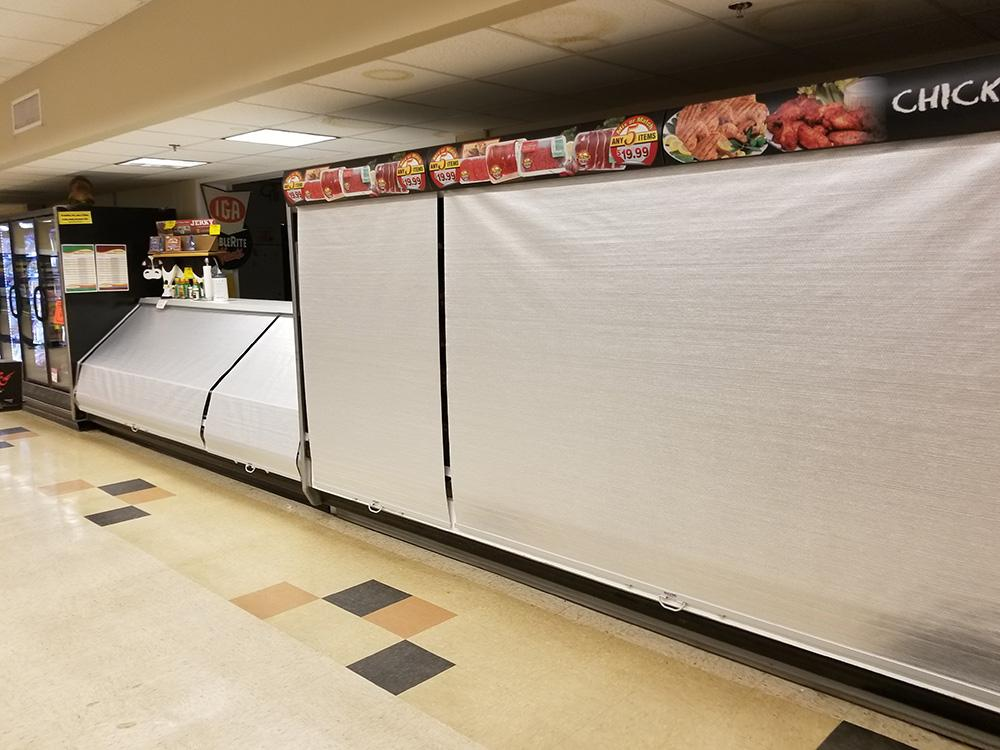
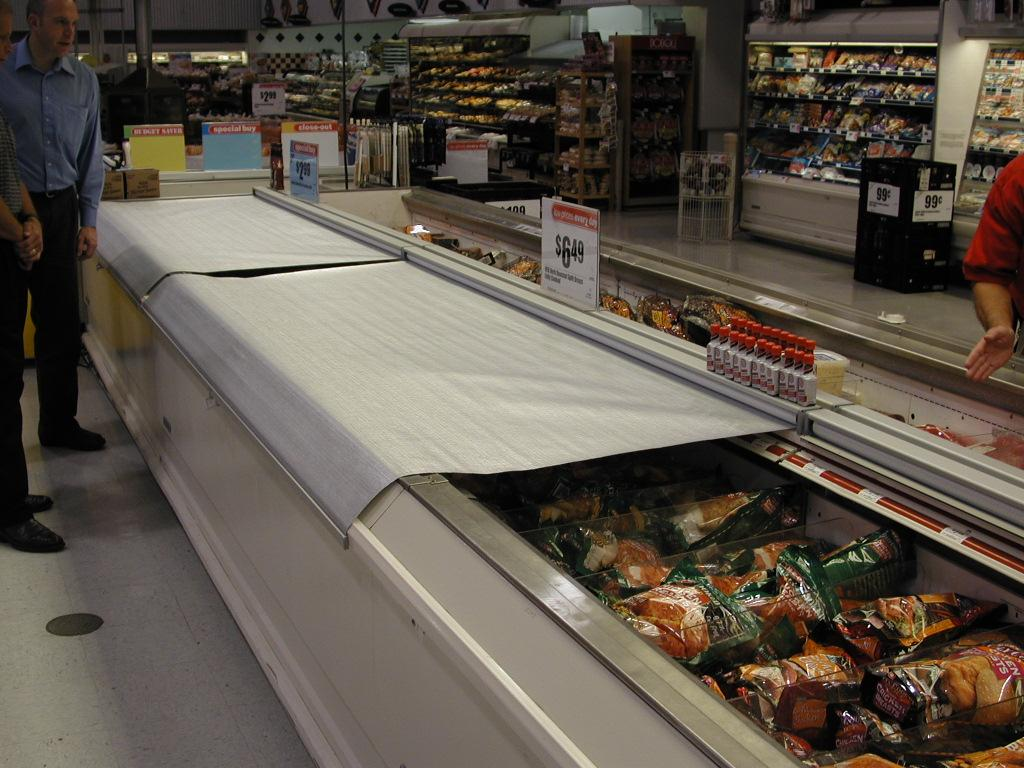
  • Cold Air Containment: Covers trap the chilled air inside the case, preventing warm ambient air from mixing with the refrigerated environment.
  • Consistent Temperature: By reducing airflow and heat exchange, covers maintain steady temperatures, preventing spoilage and maintaining moisture in perishable products.
  • Reduced Energy Load: When cold air is contained, compressors do not have to work as hard in the morning to bring the case back to the desired temperature.
  • Enhanced Product Appearance: Stable temperatures prevent surface dehydration, discoloration, and condensation, helping products look fresh and appealing at opening.
  • High-quality refrigeration covers are designed to fit specific case types multi-deck, island, coffin, or endcap ensuring maximum coverage and sealing performance.

    Department-Specific Benefits

    Refrigeration covers provide unique advantages for different grocery categories:

    Produce: Leafy greens, herbs, and berries retain moisture and crispness, reducing first-hour discard.

  • Dairy: Cheese, butter, and cream maintain texture and color, minimizing quality loss from fat softening or oxidation.
  • Meat and Seafood: Red meats, poultry, and seafood maintain surface moisture and color, preventing the “dry” or “gray” look that discourages buyers.
  • Prepared Foods: Salads, sandwiches, and ready-to-eat meals maintain consistency and freshness without altering flavor or appearance.
  • By department, the most immediate improvements are seen where temperature sensitivity and moisture retention are critical.

    Best Practices for Using Refrigeration Covers

    To maximize benefits, retailers should follow several key steps:

  • Proper Fit: Ensure covers match the dimensions of each case type, avoiding gaps that allow cold air to escape.
  • Consistent Deployment: Include cover placement in nightly closing procedures to ensure every case is protected.
  • Integration With Lighting: Combine covers with food-safe lighting systems to reduce oxidation and color degradation in sensitive products.
  • Staff Accountability: Assign responsibility for nightly deployment and document completion to prevent missed nights.
  • Regular Inspection: Check for wear, misalignment, or damage that could compromise temperature containment.
  • These steps ensure refrigeration covers perform reliably and consistently, maximizing both energy savings and product quality.

    Energy Efficiency and Cost Savings

    Refrigeration covers not only protect product quality they also contribute to operational efficiency:

  • Lower Utility Bills: Reducing overnight temperature drift lessens the work required by compressors, lowering electricity costs.
  • Extended Equipment Life: Less frequent cycling reduces strain on refrigeration systems, minimizing maintenance and repair needs
  • Labor Savings:

    Investing in covers delivers measurable return on investment, particularly in stores with multiple open display cases or extended hours.

  • Temperature Monitoring and Performance Tracking

    Retailers can measure the effectiveness of refrigeration covers by tracking:

  • Overnight Case Temperature: Compare readings before and after cover implementation to quantify improvements.
  • First-Hour Product Quality: Track discard rates and visual appearance at opening to evaluate freshness retention.
  • Energy Usage: Monitor compressor runtime and electricity consumption to validate operational savings.
  • Staff Compliance: Ensure nightly deployment is consistent to maintain reliable performance across all cases.
  • Data from these metrics helps stores justify investment in covers and identify further opportunities for operational improvement.

    Common Mistakes to Avoid

    Incorrect Cover Size: Gaps reduce effectiveness, allowing cold air to escape and warm air enter.

  • Skipping Nights: Even the best covers are ineffective if not deployed consistently.
  • Blocking Case Components: Avoid obstructing fans, vents, or product displays, which could create uneven cooling or airflow problems
  • Neglecting Maintenance:Covers should be cleaned and inspected regularly to prevent damage, debris accumulation, or improper sealing.Awareness of these issues ensures that refrigeration covers deliver maximum benefits without introducing new challenges.
  • Conclusion

    Refrigeration covers are a simple, cost-effective solution for reducing overnight case temperature drift in open display units. By containing cold air, stabilizing temperatures, and minimizing moisture loss, they protect product quality, reduce labor and waste, and improve energy efficiency.

    When integrated into standard closing procedures and combined with proper lighting and staff accountability, refrigeration covers help supermarkets maintain consistent freshness, optimize operational efficiency, and improve customer satisfaction.

    For more information on durable, properly sized refrigeration covers designed for open display cases, visit www.refrigerationcovers.com and discover solutions that protect perishable products and reduce overnight temperature drift.
    Lowering Dehydration and Color Fading

    A practical guide to selecting covers that protect leafy greens and berries from overnight moisture loss and harmful lights
    Produce departments are some of the most sensitive areas in grocery stores. Leafy greens, herbs, and berries are highly perishable, and even small overnight temperature fluctuations or exposure to ambient air can lead to moisture loss, wilted leaves, and faded colors. These issues affect not only product quality but also sales, shrink, and shopper satisfaction. Night covers provide a simple, effective solution to protect produce during non-operational hours while reducing energy use and maintaining visual appeal at opening.

    Why Produce Suffers Overnight

    Open produce cases are designed for customer access, but after hours, several factors contribute to product deterioration:

  • Ambient Air Infiltration: Warmer air from the store enters open cases, accelerating moisture loss and causing leaves and berries to wilt.
  • Light Exposure: Harmful light wavelengths, especially from high-intensity display lighting, can trigger photooxidation, leading to color fading and reduced visual appeal.
  • Temperature Fluctuations: Without a physical barrier, cold air escapes, and case temperatures rise slightly, which can shorten shelf life.
  • Airflow from Fans: Circulating fans, designed to maintain display consistency, can unintentionally increase dehydration during overnight operation.
  • These factors combine to create a “first-hour discard” problem, where employees must remove visibly degraded produce at store opening.
  • How Night Covers Help Protect Produce
    How Night Covers Help Protect Produce

    Night covers serve as a practical solution to reduce dehydration and color fading. Their key benefits include:

  • Moisture Retention: Covers trap chilled air inside the case, slowing water loss and keeping leaves, herbs, and berries crisp.
  • Color Preservation: By limiting exposure to ambient light and harmful wavelengths, night covers reduce fading and maintain vibrant product appearance.
  • Temperature Stability: Covering the case helps prevent minor overnight
  • Energy Efficiency: Containing cold air reduces compressor load, lowering electricity consumption while maintaining optimal conditions.
  • High-quality covers are tailored to fit different case types, such as multi-deck, coffin, or island cases, ensuring maximum protection across the display.

    Choosing effective night covers requires attention to fit, material, and usability:

    1. Proper Sizing: Covers must match the exact dimensions of the case to prevent gaps where cold air can escape.

    2. Durable Materials: Covers should be made from flexible, food-safe materials that resist tearing and can withstand daily handling.
    3. Ease of Installation: Staff should be able to place and remove covers quickly without disrupting other store closing tasks.
    4. Visibility and Cleaning: Transparent or semi-transparent materials allow staff to confirm coverage while ensuring easy sanitation.
    5. Compatibility With Case Type: Multi-deck, island, and coffin cases may require custom-shaped covers or segmented designs for optimal performance.

    Properly selected covers minimize moisture loss and color fading while remaining practical for staff to deploy consistently.

    Best Practices for Using Night Covers in Produce

    To maximize their benefits, retailers should follow these operational guidelines:

    • Integrate Into Closing SOPs: Make cover placement a standard step in the nightly routine to ensure every case is protected.
    • Monitor Case Temperatures: Track overnight temperatures before and after implementing covers to validate effectiveness.
    • Avoid Obstructing Fans or Vents: Ensure airflow systems are not blocked, which could create uneven cooling or hotspots.
    • Regular Cleaning: Keep covers free from dirt, debris, or sticky residues that could reduce sealing effectiveness or contaminate produce.
    • Staff Accountability: Assign responsibility for nightly placement and removal to ensure consistency across all shifts.

    These practices help maintain product freshness, reduce first-hour discard, and improve customer experience.

    Measuring Success

    Retailers can quantify the impact of night covers by monitoring:

    • Moisture Levels: Track leaf crispness, wilting, and berry firmness at opening compared to previous performance.
    • Visual Appeal: Observe color retention in leafy greens and berries over multiple nights.
    • Shrink Reduction: Measure reductions in discarded produce during the first hour of operation.
    • Energy Savings: Monitor compressor runtime and electricity use to confirm efficiency improvements.

    Data from these metrics helps stores adjust deployment, validate ROI, and optimize coverage for maximum protection.

    Department-Specific Notes
    • Leafy Greens: Night covers prevent dehydration in lettuce, spinach, and kale, maintaining crispness and extending shelf life.
    • Herbs: Covers reduce wilting and loss of aroma and flavor in delicate fresh herbs.
    • Berries: Fragile berries retain color, firmness, and shine when covered, minimizing early spoilage.
    Avoiding Common Mistakes
    • Using Ill-Fitting Covers: Gaps or misaligned covers allow warm air and harmful light to reach the produce.
    • Skipping Nightly Deployment: Inconsistent use significantly reduces effectiveness.
    • Ignoring Cleaning: Dirty or sticky covers compromise hygiene and may block airflow.
    • Blocking Case Components: Ensure that fans, vents, and refrigeration sensors remain unobstructed for consistent cooling.
    • Awareness and training prevent these issues and help maximize the benefits of night covers.

    Conclusion

    Night covers are a simple, cost-effective way to reduce dehydration and color fading in open produce cases. By retaining moisture, limiting harmful light exposure, and maintaining temperature stability, they improve product freshness, reduce first-hour discard, and support operational efficiency.
    Retailers that integrate night covers into standard closing routines, monitor performance, and train staff on proper use will see tangible improvements in product quality and customer satisfaction.

    In the competitive grocery industry, optimizing energy usage while maintaining food freshness is essential. One highly effective yet often overlooked solution is the use of refrigeration night covers. These covers, particularly those offered by Econofrost, provide energy savings, preserve product quality, and enhance operational efficiency. In this guide, we will explore the key benefits of refrigeration covers and how they can improve the overall efficiency of supermarket refrigeration systems.

    The Best Refrigeration Covers for Supermarkets
    Enhancing Energy Efficiency with Refrigeration Covers

    Refrigerated display cases often contribute significantly to a supermarket’s energy consumption. When left open during non-operating hours, these units waste energy by allowing cool air to escape and warm air to enter. Econofrost night covers solve this problem by providing a thermal barrier that reduces the load on refrigeration units.

    Using Night covers can help supermarkets achieve energy savings of up to 36%, making them an eco-friendly solution that also reduces electricity costs. With reduced energy consumption, these covers play an important role in a supermarket’s sustainability strategy.

    Preserving Freshness and Reducing Waste
    Preserving Freshness and Reducing Waste

    Temperature fluctuations can negatively affect the quality of perishable items like meats, dairy, and fresh produce. By utilizing Econofrost night covers, supermarkets can stabilize the temperature inside refrigerated units, thereby reducing spoilage and preserving product freshness.

    These covers help extend the shelf life of products by preventing temperature swings, ensuring that food stays fresh for a longer period. This not only leads to less waste but also enhances customer satisfaction as shoppers find fresher, high-quality items on display.

    Improving Food Safety and Product Display

    Food safety is paramount for any supermarket, and one of the primary concerns is the exposure of food to light and temperature instability. Econofrost night covers reduce light exposure, especially harmful visible light, that can degrade the quality of perishable foods like meat, dairy, and vegetables.

    These covers help maintain food safety standards by providing an optimal storage environment, which also results in a more attractive presentation of products. Customers are more likely to purchase items that appear fresh, which can improve sales and brand reputation.

    Supporting Sustainability with Night Covers
    Supporting Sustainability with Night Covers

    In addition to reducing energy costs and waste, Econofrost night covers support sustainability in supermarkets. By lowering the energy consumption of refrigeration units and minimizing food spoilage, these covers help stores align with green initiatives and reduce their carbon footprint.

    Many supermarkets are focusing on becoming more eco-conscious, and adopting efficient solutions like night covers is a simple but effective way to contribute to this goal. By integrating these covers, supermarkets can significantly reduce their environmental impact.

    Durability and Performance of Econofrost Covers

    When choosing refrigeration covers, durability and reliability are crucial factors. Econofrost night covers are designed with high-quality, tear-resistant materials such as woven aluminum, ensuring that they can withstand the demands of busy supermarket environments.
    These covers are easy to install, durable, and require minimal maintenance, providing long-term protection and performance for refrigerated display cases. Whether you’re managing a small store or a large supermarket chain, Econofrost covers offer reliable solutions that can be adapted to a variety of refrigeration systems.

    How to Choose the Best Refrigeration Covers for Your Store

    Selecting the right refrigeration cover for your store depends on several factors, including the size of your refrigeration units, your product types, and your energy efficiency goals. Econofrost offers a wide range of night covers that can be customized to fit different types of display cases, making them an ideal choice for supermarkets of any size.

    When choosing the best cover for your store, consider the material quality, ease of use, and energy-saving capabilities. Econofrost night covers are a top choice for those looking to enhance operational efficiency while maintaining product quality.

    Conclusion

    Econofrost refrigeration covers are a smart investment for supermarkets aiming to reduce energy costs, preserve food freshness, and improve sustainability efforts. These covers offer significant advantages, including reduced energy consumption, longer product shelf life, and enhanced food safety. By choosing Econofrost night covers, supermarkets can ensure their refrigeration systems operate efficiently, contributing to a more cost-effective and eco-friendly business.

    Visit www.refrigerationcovers.com today to discover the best refrigeration covers for your supermarket.
    Boost efficiency. Preserve freshness. Reduce waste.